
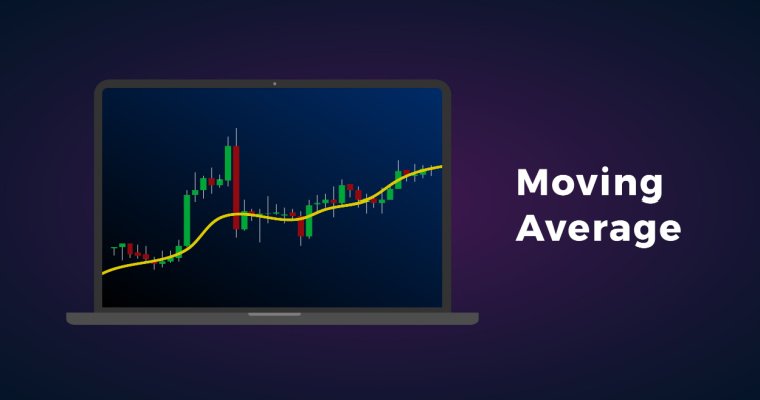

Exponential vs. Simple Moving Averages: Key Differences Explained — this topic sits at the core of modern technical analysis, especially when evaluating the simple moving average (SMA) and its faster, more reactive counterpart, the exponential moving average (EMA). For decades, investors, day traders, and quantitative analysts have debated which moving average best identifies emerging trends, filters noise, and signals momentum shifts with the highest reliability.
This investigative breakdown explores not only how SMAs and EMAs differ mathematically, but how those differences change real trading outcomes. By the end, you’ll understand how each indicator behaves under volatility, which traders rely on which version, and why both tools remain essential despite the rise of algorithmic trading.
Understanding the Simple Moving Average (SMA)
The simple moving average is one of the oldest and most widely used technical indicators. At its core, it calculates the arithmetic mean of a selected number of closing prices. For example, a 50-day SMA sums the closing prices of the last 50 trading days and divides the total by 50.
Why the SMA Still Shapes Modern Markets
In an era dominated by high-frequency trading, the simple moving average remains surprisingly relevant. Its slow, methodical structure makes it ideal for:
- Long-term trend identification
- Support and resistance mapping
- Smoothing extreme market noise
- Identifying market cycles
This durability explains why SMAs still appear in institutional trading dashboards, index-tracking algorithms, and even regulatory market models.
Yet traders often wonder: is the SMA too slow in fast markets? That question leads to the core debate — SMA vs. EMA.
How the Exponential Moving Average (EMA) Shifts the Equation
The EMA assigns greater weight to recent price action, allowing it to respond more quickly to new information. While the simple moving average treats each data point equally, the EMA places more emphasis on the most current closing prices.
Why Traders Prefer the EMA in Volatile Conditions
In markets driven by rapid order flow — crypto, FX, high-cap tech stocks — the EMA offers:
- Faster reactions to trend reversals
- Earlier signals during breakouts
- Quicker exits before downturns
- Better alignment with intraday volatility
This speed comes with a trade-off: EMAs are more prone to whipsaws, where fast reactions generate false signals in choppy markets.
The Real-World Impact: Which Traders Choose Which?
Professional Swing Traders
Swing traders often rely on the SMA to define macro trends and the EMA to time entries. A common setup:
- 200-day SMA to judge long-term trend
- 20-day EMA to spot momentum shifts
Day Traders & Scalpers
Short-term traders overwhelmingly favor EMAs — especially 9, 12, and 21 periods — because they respond instantly to price acceleration.
Long-Term Investors
Portfolio managers prefer SMAs because they reflect broader market behavior and are less influenced by temporary volatility spikes.
SMA vs. EMA: Core Differences in One Table
| Feature | Simple Moving Average (SMA) | Exponential Moving Average (EMA) |
|---|---|---|
| Calculation Method | Equal weight for all periods | Heavier weight on recent prices |
| Reaction Speed | Slower, smoother | Faster, more sensitive |
| Best For | Long-term trends, stability | Short-term signals, volatility |
| False Signals | Fewer | More frequent |
| Popular Periods | 50, 100, 200 | 9, 12, 20, 21 |
| Bias | Balanced | Recency-focused |
| Market Noise | Filters noise well | Responds to noise quickly |
Why the Debate Still Matters
Despite modern algorithmic strategies — many of which combine hundreds of indicators — the battle between SMA and EMA remains symbolic of two opposing philosophies:
1. Stability vs. Sensitivity
The simple moving average prioritizes consistency. It smooths noise and prevents overreaction.
2. Speed vs. Accuracy
The exponential moving average prioritizes early detection. It risks false alarms but provides a significant timing edge when trends accelerate.
How Market Conditions Change the Winner
Bull Markets: EMA Advantage
In high-momentum environments, EMAs outperform SMAs by signaling entries earlier and exploiting rapid price accelerations.
Sideways Markets: SMA Advantage
During consolidation, EMAs tend to generate misleading crossovers. SMAs, being slower, filter out the indecision.
Bear Markets: Mixed Results
- EMAs provide faster exits
- SMAs offer steadier long-term perspective
A combined strategy often works best — something professional traders have quietly adopted for years.
Investigating Key Use Cases
Trend Confirmation
The 200-day simple moving average is one of the most respected indicators in global finance. Institutional strategies, ETFs, and even pension funds use it to assess macrotrend direction.
In contrast, EMAs — particularly the 50-day EMA — often serve as early warning signals before major trend reversals occur.
Crossover Strategies
Classic systems like the Golden Cross (50 SMA crossing above 200 SMA) use simple moving averages because long-term signals matter more than speed.
More modern traders, especially in crypto and FX, use EMA crossovers (e.g., 9/21 EMA) because timing accuracy is essential.
FAQs
Q1: What is the main difference in Exponential vs. Simple Moving Averages: Key Differences Explained?
The main difference is that the SMA gives equal weight to all prices, while the EMA prioritizes recent prices, making it faster but more sensitive to noise.
Q2: Is the simple moving average better than the exponential moving average?
The simple moving average is better for long-term stability, while the EMA is better for fast-moving markets. The choice depends on the strategy.
Q3: How does volatility impact Exponential vs. Simple Moving Averages: Key Differences Explained?
Volatility tends to increase EMA false signals, while SMAs remain more stable. Traders in high-volatility markets often blend both indicators.
Q4: Is the simple moving average still used by professional traders?
Absolutely. SMAs remain foundational for long-term trend analysis, institutional strategies, and macroeconomic market modeling.
Conclusion: A Forward-Looking Perspective
The debate over Exponential vs. Simple Moving Averages: Key Differences Explained is not about which indicator is universally superior. Instead, it highlights how markets have evolved and how traders blend old and new methodologies. The simple moving average remains unbeatable for long-term clarity, while the EMA excels in speed and responsiveness.
As machine learning and algorithmic strategies continue to evolve, the integration of SMA and EMA may become even more sophisticated — blending stability and speed to generate adaptive, market-aware models. For now, understanding both moving averages is essential for any serious investor looking to navigate modern markets with confidence.
