
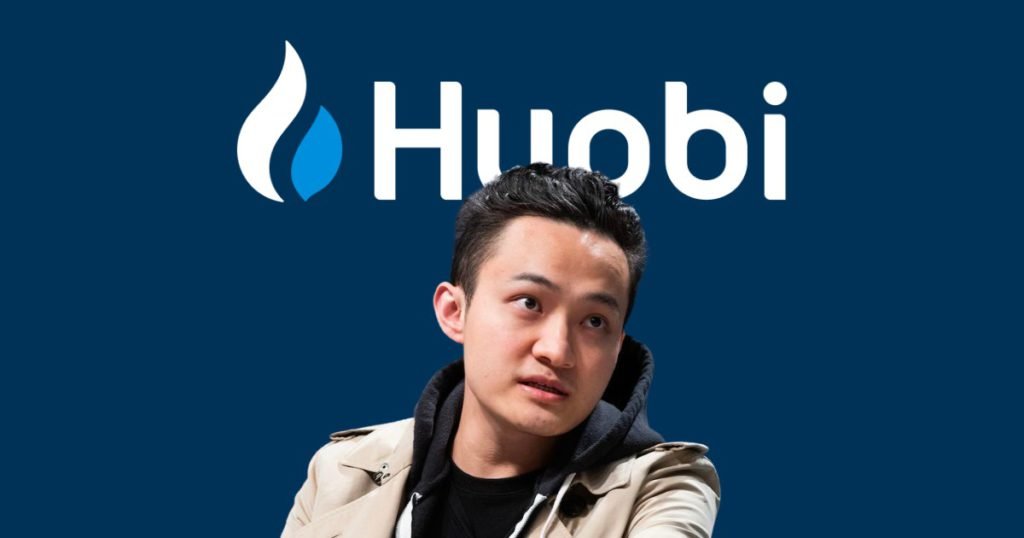

Huobi founder Li Lin is once again making waves in the crypto world. According to multiple industry-insider reports, Li and a consortium of early Ethereum backers are launching a $1 billion Ethereum (ETH) treasury firm, seeking to create a regulated vehicle that will accumulate and hold large-scale ETH reserves.
In this investigative analysis, we examine the origins of this venture, what is known so far about the structure and participants, the broader implications for Ethereum and crypto treasuries, and the risks and open questions that lie ahead.
Background: Huobi, Li Lin and crypto-treasuries
From Huobi to Avenir
Li Lin founded Huobi in 2013 (now styled HTX) and built it into one of the world’s largest cryptocurrency exchanges.After regulatory headwinds—especially in China—Li transitioned into investment and asset-management roles, notably via his firm Avenir Capital (sometimes “Avenir”), which has become a significant player in crypto asset allocation.
The rise of digital-asset treasuries
In the past few years, we’ve seen a wave of companies—both in crypto and traditional finance—viewing digital assets (especially Bitcoin, and increasingly Ethereum) as a treasury asset or core balance sheet component. The so-called “digital asset treasury” (DAT) model aims to combine capital reserves with blockchain-native instruments and on-chain exposure, offering potential upside but also operational/regulatory risk.
Li’s new move appears very much in line with this trend.
The reported $1 B Ethereum treasury venture
What has been reported
- Bloomberg reported that Li Lin is set to lead a $1 billion Ether (ETH) accumulator/trust, supported by Asia’s early Ethereum investors.
- The initiative reportedly has already raised approximate commitments of ~$1 billion, including ~$200 million from Li’s Avenir and ~$500 million from Asian institutional investors.
- The group is reportedly in talks to acquire a Nasdaq-listed company (likely a shell or SPAC vehicle) to structure or host the entity.
- Key collaborators named include Fenbushi Capital co-founder Shen Bo, HashKey Group CEO Xiao Feng, and Meitu founder Cai Wensheng.
- The vehicle is expected to formally launch in coming weeks.
Proposed mechanics & mission
From the available reporting, the venture appears designed as a regulated trust or fund vehicle whose primary aim will be to acquire and hold ETH as a treasury asset rather than frequent trading or speculative operations. This suggests a long-term accumulation strategy, akin to how some companies hold Bitcoin on their balance sheets.
By anchoring with $1 billion in initial capital, the firm could become one of the larger institutional ETH holders, which has implications for ETH supply dynamics, investor signaling, and corporate treasury innovation.
Why this matters for Ethereum and the broader market
Institutional demand for ETH
A $1 billion ETH treasury vehicle signals growing institutional conviction in Ethereum—not only as a token for decentralized apps, but as a reserve asset. That maturation in mindset may attract further capital into Ethereum and catalyze adoption of ETH among companies seeking blockchain exposure.
Potential supply impact
Large accumulation vehicles reduce liquid supply. If significant ETH is locked or held off exchanges via this firm (plus others), it could tighten supply and introduce a structural bullish factor. Some commentary already suggests this could “boost ETH demand.”
Innovation in on-chain treasury mechanics
By launching a regulated entity that holds ETH at scale, Li Lin and his partners could help develop frameworks for how corporates and asset-managers integrate crypto into their treasury operations—covering custody, governance, regulation, accounting, audit, and transparency.
Huobi’s legacy amplifier
Although Huobi itself (now HTX) has changed substantially, this move reinforces Li Lin’s influence in shaping crypto infrastructure. For the broader ecosystem, it signals that founders of major exchanges are not merely platform operators—they are evolving into institutional crypto builders.
Key questions and risks
Regulatory & jurisdictional risk
A major question is: where will this firm be domiciled, regulated, and how will it comply with securities, trust, crypto asset, AML/KYC and tax frameworks? The planned acquisition of a Nasdaq-listed shell hints at U.S. connection, yet crypto regulation globally remains fluid. Missteps could undermine trust or expose the firm to legal risk.
Custody, audit, transparency
Holding $1 billion of ETH requires robust custody (likely multisig or institutional grade), independent audit, proof of reserves, and governance mechanisms. The transparency of the vehicle (how frequent are holdings disclosed, how liquid are they) will matter for investor confidence.
Market risk for ETH
Despite the bullish structural narrative, Ethereum remains exposed to macro-risk (rates, regulation, network upgrades), crypto-specific risk (protocol bugs, competition) and internal tokenomics (issuance schedule, staking dynamics). If ETH declines significantly, the treasury could suffer mark-to-market losses.
Concentration and liquidity risk
Holding large amounts of ETH brings concentration risk (both in the asset and the issuer). Liquidity matters: if large redemptions or liquidations were required, ETH may not be as liquid as fiat or traditional assets. The firm will need to manage these carefully.
Conflict of interest / token-holding optics
If Li Lin’s other entities (such as Avenir) or Huobi-related ventures hold ETH or engage in related trading, questions could arise around transparency, insider advantage, or blending of interests. For a treasury vehicle, clear firewalling of related-party exposures will matter.
FAQ: Huobi founder Li Lin and the Ethereum treasury initiative
Q1: What exactly is the Huobi founder Li Lin Ethereum treasury firm?
This is a planned entity reportedly spearheaded by Li Lin (founder of Huobi) and key Ethereum-investor partners. Its mission: to raise ~$1 billion and launch a trust or fund vehicle that will accumulate and hold ETH at scale.
Q2: Why is the Huobi founder Li Lin launching an ETH treasury vehicle?
Li Lin appears motivated by the convergence of two trends: institutional demand for blockchain exposure and the evolution of digital assets as treasury assets. By creating a large ETH-focused vehicle, he and his team may serve institutional clients, help define standards, and signal conviction in ETH’s role.
Q3: How will the Huobi founder Li Lin firm affect Ethereum (ETH)?
If the vehicle successfully accumulates large amounts of ETH and holds it off market, it could tighten supply, increase institutional visibility of ETH as a reserve asset, and elevate market sentiment. However, success depends on execution.
Q4: What are the major risks for the Huobi founder Li Lin ETH treasury firm?
Risks include regulatory uncertainty, custody and audit risks, ETH market volatility, liquidity constraints, and reputational risk. Without strong governance and transparency, the vehicle could face obstacles.
Q5: When will the Huobi founder Li Lin ETH treasury entity launch?
Sources say the formal announcement is expected “in the next weeks.”
Forward-looking conclusion
The move by Huobi founder Li Lin to launch a $1 billion Ethereum treasury firm marks a significant inflection point in how crypto infrastructure and corporate treasury strategy intersect. It signals that ETH may no longer be merely a utility token for applications, but increasingly viewed as a strategic reserve asset, on par with—or complementary to—Bitcoin in institutional portfolios.
If executed well, this firm could serve as a template: demonstrating how a regulated, blockchain-native treasury vehicle is structured, capitalised, governed, and reported. That could lower barriers for other firms considering crypto treasury allocation, accelerate ETH adoption among treasurers, and introduce new institutional capital flows into Ethereum.
However, the success of this venture is far from assured. Regulatory headwinds, operational execution, market risk, and transparency all remain real and material. The next few months will likely reveal the vehicle’s domicile, legal structure, governance, and first disclosures of holdings. For Ethereum watchers, the question is not just how much ETH will be accumulated, but how this firm will be run—and whether it offers a credible roadmap for the next generation of digital-asset treasuries.
In short: Huobi founder Li Lin’s foray into ETH treasury management may become a landmark moment in crypto history, but its ultimate impact will hinge on execution, transparency and market reception.
