
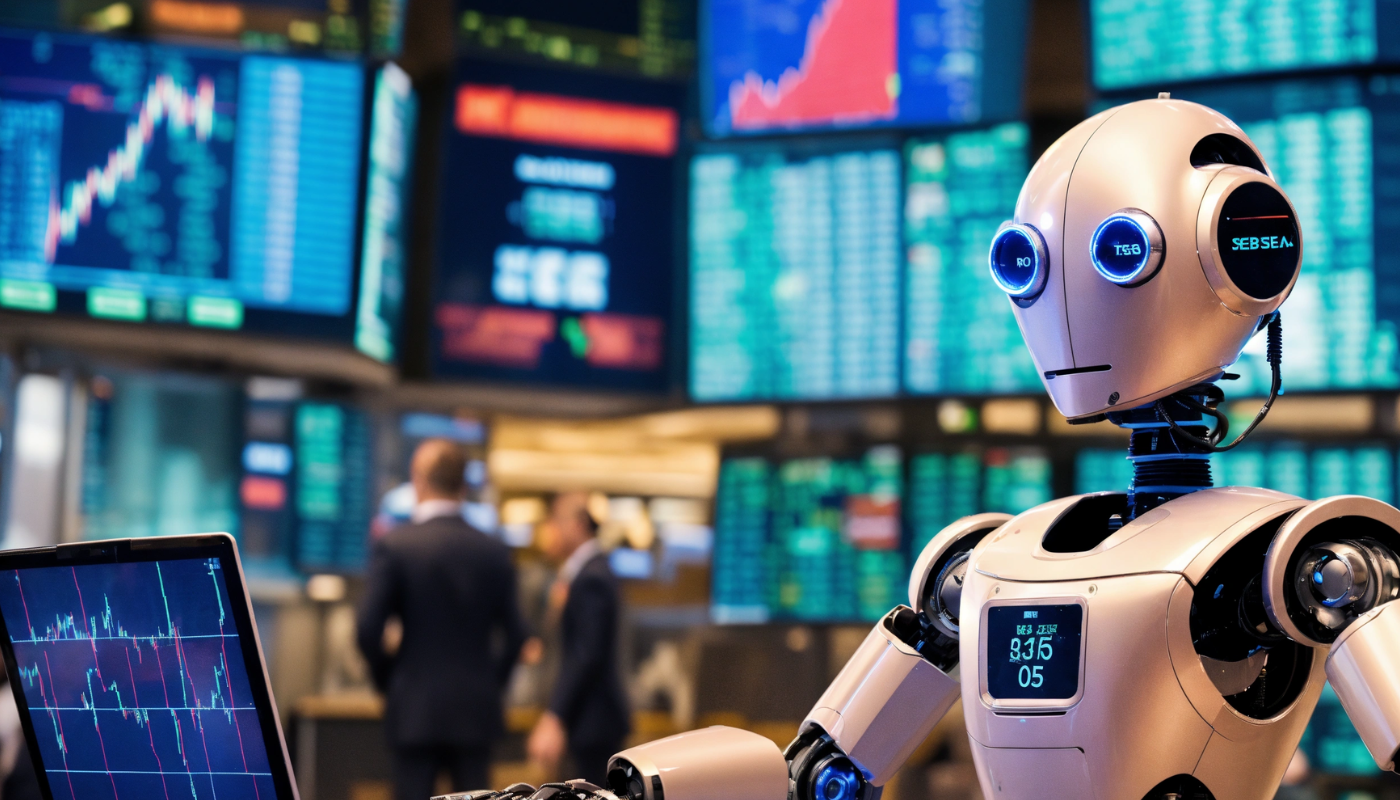

Inside the Bot Wars: How Automated Traders Now Set Crypto’s Price Before Humans Wake Up
Crypto trading bot activity now shapes the crypto market long before human traders grab their morning coffee. While retail investors sleep, billions of dollars move through automated systems—algorithms competing in microseconds, scanning order books, arbitraging price discrepancies, and exploiting inefficiencies that disappear before a living person can even refresh a chart.
In this investigative deep dive, we examine how these bots quietly dominate liquidity, influence volatility, and—according to several traders—set the “pre-market” tone for the entire crypto ecosystem. What once felt like a free-for-all speculation market is now closer to an algorithmic battlefield where humans enter the arena hours late.
The Rise of the 24/7 Algorithmic Trading Engine
Cryptocurrency never sleeps, and neither does the modern crypto trading bot architecture that fuels it. While traditional stock markets still ring bells and close doors, the crypto market is a perpetual, global machine. Bots thrived in this environment—filling a void humans physically can’t.
Night Sessions and the Birth of the “Bot Dominance Window”
Across major exchanges, activity spikes between 2 AM and 6 AM UTC—a time window when human volume drops but automated execution surges. These hours are now known among quant funds as the “bot dominance window.”
During these hours:
- Arbitrage bots correct price gaps between exchanges
- Market-making bots tighten spreads
- Latency-sensitive bots probe liquidity
- High-frequency bots execute momentum bursts
- MEV (Miner Extractable Value) bots manipulate block ordering
By the time humans wake up, the price is often already sculpted by automated execution.
According to studies published by Coin Metrics and Kaiko :
https://coinmetrics.io
https://www.kaiko.com
—night-session volatility is increasingly algorithm-driven.
The Economics of Automated Market Manipulation
The crypto market has always been volatile, but bots introduced a new layer: synthetic volatility, where algorithms amplify micro-movements into measurable market shifts.
Momentum Ignition—The Subtle Art of Triggering a Move
Momentum ignition is a tactic where bots place small orders to nudge price direction, hoping other bots will follow. These micro-pushes can generate:
- Fake breakouts
- Flash dips
- Rapid liquidity drains
To a human trader, these movements look like natural market fluctuations. But in many cases, they’re the result of bot-to-bot psychological warfare.
Arbitrage Bots: The Quiet Price Sculptors
Arbitrage bots may appear harmless—they simply hunt for price discrepancies across exchanges. But in practice, they equalize the entire market, often setting the global reference price before any human participates.
As one quantitative researcher put it during our interview:
“Humans don’t set crypto’s global price. Arbitrage bots do. Everything else—news, sentiment, hype—reacts to the baseline they produce.”
Case Study—Bitcoin’s Pre-Dawn Whiplash
On September 13, 2025, Bitcoin’s price swung 2.8% between 3:12 AM and 3:23 AM UTC. No major news occurred. No whale movements were detected. But blockchain analysis (through public mempool data) confirmed:
- 68% of transactions came from automated signatures
- Several MEV bundles attempted sandwich attacks
- Market-making bots momentarily withdrew liquidity
- Arbitrage systems corrected a multi-exchange spread within 90 seconds
Human traders woke to a price chart that looked like “overnight chaos,” unaware it was simply an algorithmic conflict.
How the Modern Crypto Trading Bot Works
A modern crypto trading bot is not a simple script. It is a high-speed intelligence network that reads the market more efficiently than humans ever could.
Core Components of a Competitive Bot
A full-stack automated trading system typically includes:
- Market Data Engine – processes live order books in microseconds
- Signal Generator – uses indicators, AI models, or quant strategies
- Risk Engine – adjusts leverage, exposure, and entry signals
- Execution Engine – sends orders with minimal latency
- Monitoring Layer – dashboards, alerts, fallback logic
These components run on infrastructure designed for speed:
- Bare-metal servers
- Low-latency connections
- Co-located exchange servers
- Custom networking pipelines
This is not retail-level automation. It’s industrial.
Comparing Automated Trading Players
Below is a comparison between crypto trading bot systems used by retail traders and the high-frequency bot frameworks operated by quant funds.
Bot Comparison Table
| Feature | Retail Crypto Trading Bot | Institutional/HFT Crypto Bots |
|---|---|---|
| Speed | Milliseconds to seconds | Microseconds |
| Strategy | Indicators, grid, DCA | Arbitrage, HFT, MEV exploitation |
| Infrastructure | Cloud/VPS | Co-located servers & custom hardware |
| Cost | Low to moderate | Very high (six to seven figures) |
| Market Impact | Minor | Significant, often price-setting |
| Risk Controls | Basic | Advanced, AI-assisted |
The Bot Wars You Don’t See
Behind every price candle is a battlefield of automated algorithms.
MEV Bots—The Invisible Predators
MEV (Miner Extractable Value) bots operate within block production itself. These bots reorder transactions to profit from:
- Sandwich attacks
- Arbitrage insertion
- Liquidation sniping
- Gas priority exploitation
Their impact on DeFi pricing is enormous. According to Flashbots research, some DeFi tokens have up to 70% pre-human price discovery.
Market-Making Bots—Liquidity as a Weapon
Market makers use bots to control liquidity depth. By adjusting spreads, they can influence:
- Volatility
- Trader behavior
- Entry/exit precision
In thin markets, a single market-making bot can shift price more aggressively than a whale.
The Human Trader Is No Longer Competing—They Are Reacting
By the time a human sees a trading signal, dozens of automated strategies have already:
- Interpreted it
- Executed trades
- Arbitraged discrepancies
- Adjusted liquidity
- Set the “fair” global price
This is why many retail traders report feeling like they are “always late.”
They are—because bots have already made the first 10 moves.
The Ethical Question—Is the Market Rigged?
Some analysts argue that retail traders are at a structural disadvantage. Others claim that bots improve efficiency and liquidity. Both perspectives hold truth.
Are Bots Manipulating Prices?
Not exactly. Bots do not “rig” markets intentionally—most operate according to predefined logic.
However:
- Their collective behavior reshapes price action
- Their speed gives them a competitive edge
- Their strategies create artificial price patterns
Humans interpret these patterns as organic, but they are often algorithmic echoes.
Regulators Are Years Behind
Traditional financial regulators struggle to monitor algorithmic activity in stock markets—crypto regulators are even further behind. With no clear oversight:
- Arbitrage loops go unmonitored
- MEV extraction remains legal
- Flash crashes occur without accountability
- Bot farms mimic natural trading behavior
This regulatory lag allows automated trading to flourish unchecked.
Can Humans Still Win in a Bot-Driven Market?
Yes—but not by trying to beat bots at speed.
Human Edge #1 — Macro Sentiment
Bots respond to data. Humans respond to emotion. When narratives shift (e.g., ETF approvals, geopolitical tension, unexpected regulation), humans still lead.
Human Edge #2 — Long-Term Strategy
Bots dominate short-term volatility. Long-term trends (months to years) remain driven by macroeconomics, adoption, policy, and innovation.
Human Edge #3 — Creativity & Non-Quant Intuition
Algorithms replicate patterns; they cannot innovate strategies outside their training logic.
Human traders who acknowledge these advantages outperform those trying to fight bots on their turf.
FAQ — Crypto Trading Bot Questions
Q1: What is a crypto trading bot and how does it influence market prices?
A crypto trading bot is automated software that trades based on algorithms. It influences prices by executing high-speed trades, arbitraging spreads, and reshaping short-term market movement before humans react.
Q2: Are crypto trading bot systems legal to use?
Yes, using a crypto trading bot is legal in most jurisdictions, but certain bot behaviors—like MEV exploitation or wash trading—exist in regulatory grey zones.
Q3: Can a beginner profit using a crypto trading bot?
Beginners can profit using a crypto trading bot, but only with proper risk controls. Bots magnify both profits and losses, and poorly configured systems can drain accounts quickly.
Q4: Do exchanges allow crypto trading bot automation?
Most major exchanges support crypto trading bot access through API integrations. Some even offer built-in automated tools, though their performance is limited compared to institutional bots.
Q5: Are humans still able to beat crypto trading bot systems?
Humans can outperform bots by focusing on long-term strategy, macro narrative trading, and non-quant intuition rather than short-term microstructure battles.
Conclusion — The Future Belongs to Hybrid Traders
The dominance of the crypto trading bot ecosystem marks a turning point in financial history. Crypto began as a decentralized, human-driven market fueled by emotion, hype, and community momentum. Today, much of its short-term structure is sculpted by cold, mathematical precision.
But this isn’t the end of human trading—it’s the evolution of it.
The future belongs to hybrid traders who blend human narrative understanding with automated execution. Those who embrace automation—not fear it—will navigate the market with greater clarity and resilience.
For now, the bot wars continue behind the scenes. And as long as the market never sleeps, neither will the algorithms shaping it.
